XIMNET - The Leading Tech Agency In Malaysia
ECONOMIC HISTORY OF MALAYSIA
Reimagining Historical Research with EHM

Making archival discovery smarter through AI-powered innovation.

Background

overview
The Economic History Malaysia (EHM) project represents a significant effort to document and preserve Malaysia’s economic and social evolution through a comprehensive digital archive. As the platform expanded beyond its pioneering historical GDP accounts of Malaya to include over 1.4 million pages of British Colonial Office documents, the need for a more advanced, scalable, and user-friendly digital experience became increasingly critical.

In partnership with XIMNET, the platform was reimagined to support deeper research, faster access to information, and a more intelligent way of interacting with large-scale historical data. By integrating AI-driven capabilities and modern web technologies, the new platform transforms how users explore and engage with complex archival content.
the client
Kreatif KL Festival
Economic History Malaysia (EHM) is a prestigious digital initiative dedicated to chronicling Malaysia’s economic history and development. The project serves as a valuable resource for researchers, academics, students, and the public, providing access to extensive datasets, scholarly articles, and historical records.

With its expanding archive of primary source materials (including British Colonial Office documents) EHM plays a crucial role in supporting academic research and historical discovery, making accessibility and usability key priorities for its digital platform.
challenges
One of the key challenges was managing the sheer volume and complexity of content. With over 1.4 million pages of archival documents alongside datasets and articles, users often found it difficult to locate relevant information efficiently.

The existing structure made content discovery challenging, particularly for users who required specific topics, datasets, or historical references. This created friction in the research process and limited the platform’s effectiveness as a knowledge resource.

Additionally, presenting dense academic and historical material in a way that is both accessible and engaging posed a significant challenge. The platform needed to cater to a diverse audience, from researchers requiring depth to general users seeking clarity.
our approach

To address these challenges, we focused on transforming the platform into a high-performance, research-driven digital experience, prioritising accessibility, discoverability, and intelligent interaction.

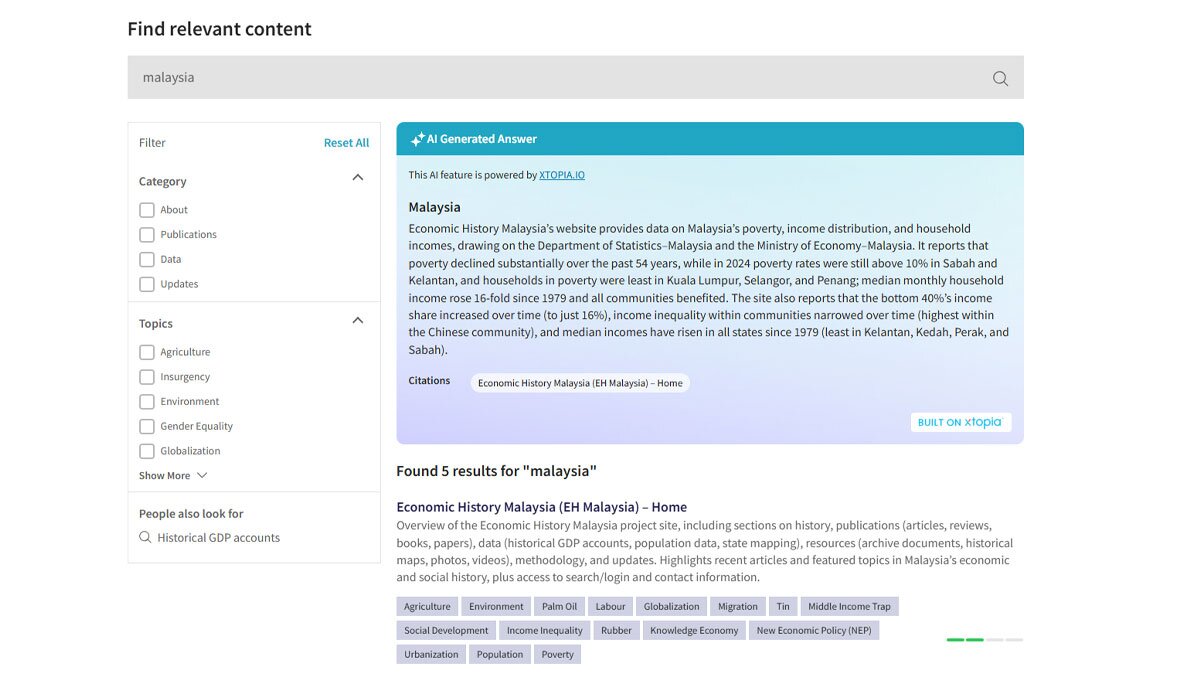
A key component of the approach was the introduction of a smart search system enhanced with topic filters and categorisation, allowing users to quickly navigate vast amounts of content and locate relevant materials with ease.

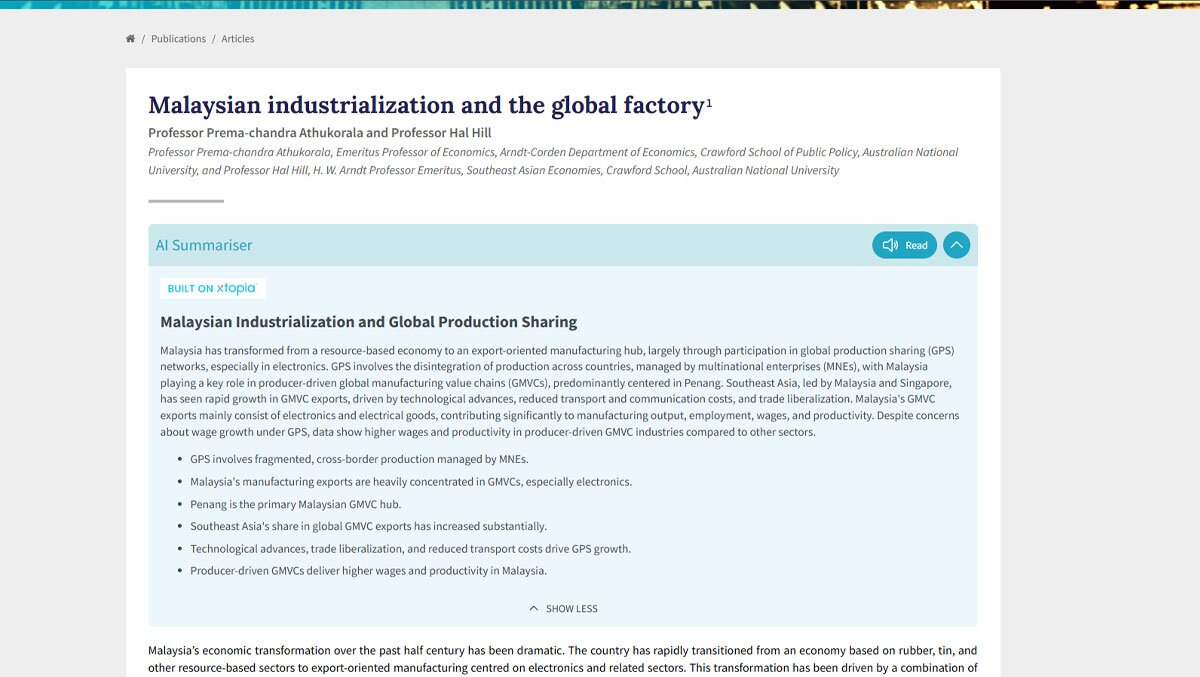
We also integrated AI-powered tools to simplify how users interact with complex information, enabling faster comprehension and more efficient research workflows.

Beyond functionality, the platform was designed with a mobile-first Progressive Web App (PWA) approach, ensuring seamless access across devices while delivering a fast, app-like experience for users on the go.
Bringing history to life through technology, unlocking knowledge for everyone
The Work

Research
Our research focused on understanding how users interact with large-scale archival and academic platforms. This included identifying common challenges in content discovery, navigation, and information processing.

Insights revealed that users often struggle with:
  • Locating specific information within extensive datasets
  • Navigating deeply structured archives
  • Processing large volumes of text-heavy content

These findings informed a strategy centred on improving searchability, simplifying navigation, and enhancing content comprehension through intelligent tools and structured categorisation.
Transforming complex data into clear, meaningful insights
Smart Search
To address the challenges of scale and complexity, we implemented a smart search system designed to significantly improve content discoverability.

The system combines:
  • Topic-based filtering
  • Structured categorisation
  • Enhanced search logic

This enables users to efficiently locate relevant documents, datasets, and articles, transforming what was once a time-consuming process into a seamless experience.
Figure 1: Smart search with filters for efficient content discovery across large archives.
AI Summariser
To further enhance usability, an AI-powered content summariser was introduced within the platform’s article section.

This feature allows users to quickly grasp key insights from lengthy academic and historical content, reducing the time required to process complex information while maintaining accuracy and context.

By simplifying dense material into digestible summaries, the platform supports more efficient research and improves accessibility for a broader audience.

Figure 2: AI summariser for quick understanding of long-form historical content.
The Results

The revitalised EHM platform delivers a significantly improved research experience, making large-scale historical data more accessible, navigable, and user-friendly.

Through the integration of smart search capabilities and AI-driven tools, users can now explore extensive archives with greater speed and precision, enhancing both academic research and general knowledge discovery.

The result is a modern, intelligent digital platform that bridges the gap between historical data and contemporary technology, positioning EHM as a forward-thinking initiative in the field of digital humanities.
Copyright 2026 © XIMNET MALAYSIA SDN BHD (516045-V).  All rights reserved   |  Privacy Policy  |  Get in Touch  |  Employee Code of Conduct  |  Powered by XTOPIA.IO
brand_awareness
Ooops!
Generic Popup2